Buy pvy.eu ?
We are moving the project
pvy.eu .
Are you interested in purchasing the domain
pvy.eu ?
domain@kv-gmbh.de · 0541-91531010
Buy pvy.eu ?
What is the definition of hypothetical-deductive thinking and deductive thinking?
Hypothetical-deductive thinking is a problem-solving approach that involves creating a hypothesis or educated guess about a situation and then testing it through deductive reasoning. Deductive thinking, on the other hand, is a logical process where one starts with a general statement or hypothesis and then examines the possibilities to reach a specific, logical conclusion. In essence, hypothetical-deductive thinking combines the generation of hypotheses with deductive reasoning to arrive at a solution, while deductive thinking focuses solely on drawing specific conclusions from general principles. **
What is the definition of hypothetico-deductive thinking and deductive thinking?
Hypothetico-deductive thinking is a scientific method that involves formulating a hypothesis and then testing it through observation and experimentation to reach a conclusion. It is a process of making educated guesses and then systematically testing them to determine their validity. Deductive thinking, on the other hand, is a logical process where conclusions are drawn based on a set of premises or assumptions. It involves reasoning from general principles to specific instances to reach a logical conclusion. **

Similar search terms for Deductive
Top-Angebote
Products related to Deductive:
-
Sesderma Reti Age 5 Liposomal Serum Anti-Aging Innovation 30mLA facial serum for wrinkles and signs of ageing. Reduces wrinkles and fine lines. Hydrates and strengthens barrier. Restores youthful radiance. 5-Retinoid System: smooths wrinkles, accelerates renewal, and boosts collagen. Biomimetic Peptides: fill expression lines by stimulating collagen synthesis.53,26 £*Shipping: 5,22 £Secure redirect to the provider
-
Rethink Press Meltdown: How to Turn Your Hardship into Happiness by Jamie Alderton - Paperback Self-Help Book on Resilience, Mindset & Business GrowthMeltdown: How to Turn Your Hardship into Happiness is a practical self-help guide by fitness entrepreneur and transformation coach Jamie Alderton. Written for anyone whose life, work or wellbeing feels like it's falling apart, this book shows readers how to measure what's broken in their body, brain and business, then apply proven strategies to rebuild momentum, confidence and lasting happiness. Ever feel like your life is having a complete meltdown? This is the honest question at the heart of Jamie Alderton's guide. Rather than offering vague motivational platitudes, Meltdown gives readers a structured, repeatable framework for turning hardship into genuine progress. Alderton breaks life down into three core areas — body, brain and business — and teaches readers how to identify exactly what's gone off track in each. Published by Rethink Press, this paperback book is a brand-new self-help guide for those seeking to rebuild and find happiness.3,49 £*Shipping: 2,99 £Secure redirect to the provider
-
Stealth Gaming Headset Stand - Black - USB Connectivity - RGB LightingSleek curved black frame supports a wide range of headsets with weighted non-slip base. Customizable RGB lighting with 12 effects, USB powered with two ports. Suitable for PlayStation Xbox Nintendo Switch PC and mobile devices. No assembly required.17,83 £*Shipping: 3,95 £Secure redirect to the provider
-
Ring Battery Video Doorbell Pro – Advanced Home Security & Connectivity, NewUpgrade your home security with the Ring Battery Video Doorbell Pro – Wireless Video Doorbell Security Camera . Designed to give you peace of mind, it delivers a head-to-toe 1536p HD view so you can see every detail clearly, from visitors to parcels at your doorstep. With advanced 3D Motion Detection and Bird’s Eye View , you’ll always know what’s happening around your home. The built-in colour night vision ensures crisp images even in the dark, while the wire-free battery design makes installation simple and flexible. Stay connected anywhere with instant notifications, two-way talk, and full integration with the Ring app, Alexa devices, and more. ✔️ Wireless video doorbell – Easy to install with a rechargeable battery, no wiring needed ✔️ 1536p HD head-to-toe view – See visitors and packages clearly in high definition ✔️ 3D Motion Detection & Bird’s Eye View – Advanced alerts and aerial perspective for extra security ✔️ Colour night vision – Crystal-clear video even in low light or darkness ✔️ Two-way talk with noise cancellation – Hear and speak to visitors in real time ✔️ Customisable motion zones – Focus on the areas that matter most ✔️ Smart alerts & notifications – Instant updates on your phone via the Ring app ✔️ Alexa compatible – Works seamlessly with Echo devices for hands-free monitoring ✔️ Quick-release battery pack – Easy to recharge and swap for uninterrupted security ✔️ Durable design – Built to withstand outdoor weather conditions The Ring Battery Video Doorbell Pro combines advanced motion detection, high-definition video, and smart home integration in one sleek device. Perfect for enhancing your home security, it ensures you never miss a visitor or delivery, day or night.174,49 £*Shipping: 0,00 £Secure redirect to the provider



-
What is deductive and hypothetical thinking in pedagogy?
Deductive thinking in pedagogy involves starting with a general principle or theory and applying it to a specific situation to draw a conclusion. This approach helps students develop logical reasoning skills and understand the relationships between concepts. Hypothetical thinking, on the other hand, involves exploring different scenarios or possibilities to understand cause-and-effect relationships and make predictions. Both deductive and hypothetical thinking are important in pedagogy as they encourage critical thinking, problem-solving, and creativity in students. **
-
What is the meaning of deductive and inductive approaches?
Deductive reasoning is a logical process in which a conclusion is derived from a set of premises or assumptions. It involves moving from general principles to specific instances. On the other hand, inductive reasoning is a method of reasoning in which the premises are viewed as supplying strong evidence for the truth of the conclusion. It involves moving from specific observations to broader generalizations. Both deductive and inductive approaches are used in research and reasoning to draw conclusions and make predictions. **
-
What is the meaning of the deductive and inductive approach?
Deductive reasoning is a logical process in which a conclusion is derived from a set of premises or assumptions. It involves moving from general principles to specific instances. On the other hand, inductive reasoning is a method of reasoning in which the premises are viewed as supplying strong evidence for the truth of the conclusion, but do not guarantee it. Inductive reasoning involves moving from specific observations to broader generalizations. Both approaches are used in various fields such as science, mathematics, and philosophy to draw conclusions and make predictions based on available information. **
-
Can you give an example of the deductive learning method?
One example of the deductive learning method is a math class where the teacher presents a general rule or formula, such as the Pythagorean theorem, and then provides specific examples and exercises for students to apply the rule. The teacher starts with the general principle and then guides students through specific instances to demonstrate how the rule can be used. This approach allows students to understand the concept and then apply it to different problems. **


How do you solve the following question regarding deductive numerical reasoning?
To solve a question regarding deductive numerical reasoning, you need to carefully analyze the given information and look for patterns or relationships among the numbers. Start by identifying any consistent mathematical operations or sequences that can be applied to the numbers. Then, use these patterns to predict the next number in the sequence or to determine the missing number. It's important to approach the question systematically and consider all possible logical deductions before arriving at a conclusion. **
Could you please explain the difference between deductive and inductive reasoning to me?
Deductive reasoning starts with a general principle or premise and then applies it to a specific case to reach a logical conclusion. In contrast, inductive reasoning involves observing specific instances or examples and then drawing a general conclusion based on those observations. Deductive reasoning moves from the general to the specific, while inductive reasoning moves from the specific to the general. Both types of reasoning are important in critical thinking and problem-solving, and they are used in various fields such as science, mathematics, and philosophy. **
Top-Angebote
Products related to Deductive:
-
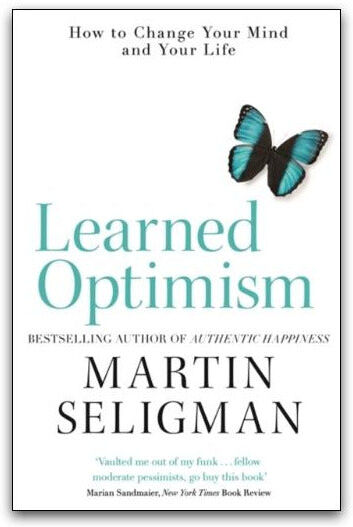
Nicholas Brealey Publishing Learned Optimism by Martin E. P. Seligman Positive Psychology, Resilience & Personal GrowthDiscover the life-changing power of positive thinking with Learned Optimism by renowned psychologist and positive psychology pioneer Martin E. P. Seligman. In this influential book, Seligman explains how optimism is not simply an inborn trait—it can be learned. Drawing on decades of psychological research, he introduces practical techniques to help readers recognize negative thought patterns, develop a more constructive outlook, and build resilience in the face of life's challenges. Whether you're looking to improve your mental wellbeing, boost confidence, manage setbacks, or achieve personal and professional success, Learned Optimism provides evidence-based strategies that can help you cultivate a healthier, more positive mindset. Why Readers Love This Book: Written by the founder of positive psychology Research-based techniques for building optimism and resilience Practical exercises to overcome negative thinking Helps improve confidence, wellbeing, and emotional strength Ideal for readers interested in psychology, self-improvement, and mental wellness A modern classic in psychology, Learned Optimism offers practical tools to help you develop a more resilient mindset and lead a happier, more fulfilling life.5,99 £*Shipping: 2,99 £Secure redirect to the provider
-
Penguin Emotional Agility by Susan David - Paperback - Bestselling Psychology & Self-Help Book for Resilience and Personal GrowthDiscover the science-backed approach to mastering your inner life with Emotional Agility by Susan David. This Wall Street Journal bestselling guide offers practical strategies for unhooking from unhelpful thoughts and emotions, helping you build greater resilience and clarity in your personal and professional life. Written by a Harvard Medical School psychologist, the book distills twenty years of research into actionable advice for navigating career transitions, relationship challenges, and the pressures of modern life. Susan David explores the internal chatter we all experience, revealing that thoughts like 'I'm not good enough' are not fixed truths, but patterns that can be reshaped. With its clear and accessible framework, Emotional Agility is a valuable resource for anyone looking to develop greater emotional agility and live a more fulfilling life.14,99 £*Shipping: 2,99 £Secure redirect to the provider
-
Sesderma Reti Age 5 Liposomal Serum Anti-Aging Innovation 30mLA facial serum for wrinkles and signs of ageing. Reduces wrinkles and fine lines. Hydrates and strengthens barrier. Restores youthful radiance. 5-Retinoid System: smooths wrinkles, accelerates renewal, and boosts collagen. Biomimetic Peptides: fill expression lines by stimulating collagen synthesis.53,26 £*Shipping: 5,22 £Secure redirect to the provider
-
Rethink Press Meltdown: How to Turn Your Hardship into Happiness by Jamie Alderton - Paperback Self-Help Book on Resilience, Mindset & Business GrowthMeltdown: How to Turn Your Hardship into Happiness is a practical self-help guide by fitness entrepreneur and transformation coach Jamie Alderton. Written for anyone whose life, work or wellbeing feels like it's falling apart, this book shows readers how to measure what's broken in their body, brain and business, then apply proven strategies to rebuild momentum, confidence and lasting happiness. Ever feel like your life is having a complete meltdown? This is the honest question at the heart of Jamie Alderton's guide. Rather than offering vague motivational platitudes, Meltdown gives readers a structured, repeatable framework for turning hardship into genuine progress. Alderton breaks life down into three core areas — body, brain and business — and teaches readers how to identify exactly what's gone off track in each. Published by Rethink Press, this paperback book is a brand-new self-help guide for those seeking to rebuild and find happiness.3,49 £*Shipping: 2,99 £Secure redirect to the provider
-
What is the definition of hypothetical-deductive thinking and deductive thinking?
Hypothetical-deductive thinking is a problem-solving approach that involves creating a hypothesis or educated guess about a situation and then testing it through deductive reasoning. Deductive thinking, on the other hand, is a logical process where one starts with a general statement or hypothesis and then examines the possibilities to reach a specific, logical conclusion. In essence, hypothetical-deductive thinking combines the generation of hypotheses with deductive reasoning to arrive at a solution, while deductive thinking focuses solely on drawing specific conclusions from general principles. **
-
What is the definition of hypothetico-deductive thinking and deductive thinking?
Hypothetico-deductive thinking is a scientific method that involves formulating a hypothesis and then testing it through observation and experimentation to reach a conclusion. It is a process of making educated guesses and then systematically testing them to determine their validity. Deductive thinking, on the other hand, is a logical process where conclusions are drawn based on a set of premises or assumptions. It involves reasoning from general principles to specific instances to reach a logical conclusion. **
-
What is deductive and hypothetical thinking in pedagogy?
Deductive thinking in pedagogy involves starting with a general principle or theory and applying it to a specific situation to draw a conclusion. This approach helps students develop logical reasoning skills and understand the relationships between concepts. Hypothetical thinking, on the other hand, involves exploring different scenarios or possibilities to understand cause-and-effect relationships and make predictions. Both deductive and hypothetical thinking are important in pedagogy as they encourage critical thinking, problem-solving, and creativity in students. **
-
What is the meaning of deductive and inductive approaches?
Deductive reasoning is a logical process in which a conclusion is derived from a set of premises or assumptions. It involves moving from general principles to specific instances. On the other hand, inductive reasoning is a method of reasoning in which the premises are viewed as supplying strong evidence for the truth of the conclusion. It involves moving from specific observations to broader generalizations. Both deductive and inductive approaches are used in research and reasoning to draw conclusions and make predictions. **
Similar search terms for Deductive
-
Stealth Gaming Headset Stand - Black - USB Connectivity - RGB LightingSleek curved black frame supports a wide range of headsets with weighted non-slip base. Customizable RGB lighting with 12 effects, USB powered with two ports. Suitable for PlayStation Xbox Nintendo Switch PC and mobile devices. No assembly required.17,83 £*Shipping: 3,95 £Secure redirect to the provider
-
Ring Battery Video Doorbell Pro – Advanced Home Security & Connectivity, NewUpgrade your home security with the Ring Battery Video Doorbell Pro – Wireless Video Doorbell Security Camera . Designed to give you peace of mind, it delivers a head-to-toe 1536p HD view so you can see every detail clearly, from visitors to parcels at your doorstep. With advanced 3D Motion Detection and Bird’s Eye View , you’ll always know what’s happening around your home. The built-in colour night vision ensures crisp images even in the dark, while the wire-free battery design makes installation simple and flexible. Stay connected anywhere with instant notifications, two-way talk, and full integration with the Ring app, Alexa devices, and more. ✔️ Wireless video doorbell – Easy to install with a rechargeable battery, no wiring needed ✔️ 1536p HD head-to-toe view – See visitors and packages clearly in high definition ✔️ 3D Motion Detection & Bird’s Eye View – Advanced alerts and aerial perspective for extra security ✔️ Colour night vision – Crystal-clear video even in low light or darkness ✔️ Two-way talk with noise cancellation – Hear and speak to visitors in real time ✔️ Customisable motion zones – Focus on the areas that matter most ✔️ Smart alerts & notifications – Instant updates on your phone via the Ring app ✔️ Alexa compatible – Works seamlessly with Echo devices for hands-free monitoring ✔️ Quick-release battery pack – Easy to recharge and swap for uninterrupted security ✔️ Durable design – Built to withstand outdoor weather conditions The Ring Battery Video Doorbell Pro combines advanced motion detection, high-definition video, and smart home integration in one sleek device. Perfect for enhancing your home security, it ensures you never miss a visitor or delivery, day or night.174,49 £*Shipping: 0,00 £Secure redirect to the provider
-
Uplift Essentials N50 High Efficiency Cat Litter Deodorizer Blocks N50 High Efficiency Cat Litter Deodorizer BlocksTake control of your homes air quality with the N50 cat litter deodorizer blocks. These professionalgrade odor eliminators are engineered to neutralize stubborn ammonia and waste smells at the source, rather than just masking them with heavy...142,97 $*Shipping: 0,00 $Secure redirect to the provider
-
HARPERCOLLINS Creative Confidence by Tom & David Kelley – Unleashing Your Creative Potential & Innovation MindsetA powerful and inspiring book from the founders of IDEO, the award-winning design firm, on unleashing the creativity that lies within each and every one of us. Too often, companies and individuals assume that creativity and innovation are the domain of the ‘creative types’. But two of the foremost experts in innovation, design and creativity on the planet show us that each and every one of us is creative. In an entertaining and inspiring narrative that draws on countless stories from their work at IDEO, and with many of the world's top companies and design firms, David and Tom Kelley identify the principles and strategies that will allow us to tap into our creative potential in our work lives, and in our personal lives, allow us to think outside the box in terms of how we approach and solve problems. ‘Creative Confidence’ is a book that will help each of us be more productive and successful in our lives and in our careers.4,95 £*Shipping: 1,99 £Secure redirect to the provider
-
What is the meaning of the deductive and inductive approach?
Deductive reasoning is a logical process in which a conclusion is derived from a set of premises or assumptions. It involves moving from general principles to specific instances. On the other hand, inductive reasoning is a method of reasoning in which the premises are viewed as supplying strong evidence for the truth of the conclusion, but do not guarantee it. Inductive reasoning involves moving from specific observations to broader generalizations. Both approaches are used in various fields such as science, mathematics, and philosophy to draw conclusions and make predictions based on available information. **
-
Can you give an example of the deductive learning method?
One example of the deductive learning method is a math class where the teacher presents a general rule or formula, such as the Pythagorean theorem, and then provides specific examples and exercises for students to apply the rule. The teacher starts with the general principle and then guides students through specific instances to demonstrate how the rule can be used. This approach allows students to understand the concept and then apply it to different problems. **
-
How do you solve the following question regarding deductive numerical reasoning?
To solve a question regarding deductive numerical reasoning, you need to carefully analyze the given information and look for patterns or relationships among the numbers. Start by identifying any consistent mathematical operations or sequences that can be applied to the numbers. Then, use these patterns to predict the next number in the sequence or to determine the missing number. It's important to approach the question systematically and consider all possible logical deductions before arriving at a conclusion. **
-
Could you please explain the difference between deductive and inductive reasoning to me?
Deductive reasoning starts with a general principle or premise and then applies it to a specific case to reach a logical conclusion. In contrast, inductive reasoning involves observing specific instances or examples and then drawing a general conclusion based on those observations. Deductive reasoning moves from the general to the specific, while inductive reasoning moves from the specific to the general. Both types of reasoning are important in critical thinking and problem-solving, and they are used in various fields such as science, mathematics, and philosophy. **
* All prices are inclusive of VAT and, if applicable, plus shipping costs. The offer information is based on the details provided by the respective shop and is updated through automated processes. Real-time updates do not occur, so deviations can occur in individual cases. ** Note: Parts of this content were created by AI.